dotAC – Interview: Nicholas Gibbins, Hugh Glaser and Ian Millard
Sep 5, 2009 by milly-shaw
Nicholas Gibbins, Hugh Glaser and Ian Millard from the University of Southampton talk about dotAC, a project which aims to increase knowledge and understanding of research taking place in the UK.
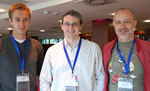
Nicholas Gibbins, Hugh Glaser and Ian Millard
There’s a lot of information gathered about researchers – the projects the do, the graphs they get, the publications they write – and all of this goes to the funding councils. The researchers never see this data themselves, even though a lot of it would actually be of use to them.
dotAC would allow them to see the community in which they work, other people who are doing the same things. Our goal is to take this data, free it and make it available to researchers.
What problems/issues is dotAC tackling?We’re tackling the lack of free-flowing information about researchers and their projects.
How would you like other software developers and users to get involved in what you are doing?There are certainly places where they could lend a hand – Export for Dspace would be a useful start. All of our software is going to be openly available, and we want people to use it. We’re going to provide a ‘boiler-plate’ navigation userface, and we’re expecting (and hoping!) that other people to produce their own mash-ups with it. The source for all of the tools that we’re developing is going to be open-source so people should be able to pick this up and run with it.
What developer communities have you been involved in and if none, why not?We’re members of euroCRIS, the organisation that develops the Serif standard. We’re part of the Eprints community too – we’re at Southampton, the Eprints team is at Southampton too so we work hand in glove with them.
What is the coolest or most exciting thing in educational software development?Some of the work going on in Virtual Research Environments is quite cool but I don’t know enough about it. But some of the work they’re doing to support researchers is not dissimilar to what we’re doing. They’re approaching it in a different direction and I think there are synergies there that are yet to be expolited.

 Citation Data Hack: Event Report
 Event Report: Managing Research Data Hack Day




Recent Comments