
Dev8D: Workshop, Hacking the Scholarly Method: Mark MacGillivray
Mark MacGillivray is the founding partner at Cottage Labs, which is a partnership doing open source software development and analysis for research and higher education. As he puts it, “we don’t sell products we trade our skills”.
Mark was leading a workshop on Hacking the Scholarly Method, which turned into a lively roundtable discussion of all the elements involved in scholarly publishing, from peer review to archiving data.
Key points covered included:
• Peer review could be as simple as commenting on a blog post – but it needs to be anonymised
• Open scholarship is sharing right from the beginning – ‘publishing’ is misleading as it seems to suggest that it all happens at the end
• Would-be open researchers face the issue of convincing institutions and, sometimes, supervisors, that they want to share research openly, not just on a university wiki
• Technology could be used to create a platform where peers could comment on different versions of research
• System could alert you when things have been changed, if graphs need updating etc
• If you’re commenting on data then that data should be available openly – need to consider the need for anonymity and privacy around certain kinds of data
• Technology is not the issue – we need to know who are the people doing it and what issues are they facing?
Read Mark’s summary of the workkshop
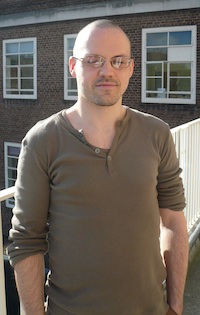
Mark MacGillivray
What brought you to Dev8D?
I originally came two years ago and had worked in universities and research groups for years and had heard about Dev8D and for the first time found myself in a room with hundreds of other people interested in the same things and doing the same things – for me it’s always been more about the tech than the science or research itself, it’s about making the tools people use to do research. It’s always been a problem that it’s hard for us to communicate with each other as we are not the core focus of those research groups, we are just the assistants. Dev8D is the perfect example of what happens when we have the ability to talk to each other and have our own network. That kind of community ties up completely with the open source software movement I’ve been working in. If I get stuck on something I look online and inevitably somebody else has had the same problem and has shared their solution. There are already so many answers online and we just need to share it. Dev8d does that in real life. I’ve come along every year since that first time and now I’m on the organising team.
What was your workshop about?
The purpose of the workshop was to imagine what we could do in the context of scholarship if we were unrestricted in terms of our access or politics or environment but still had all of the resources we currently have. Three hundred years ago two brilliant scientists tried to communicate and it took them six weeks. If we did that now with none of the constraints then how long would that take? Getting data, sharing data, feedback and iteration of that process – how would that work in an ideal environment? I think the useful outcome was the continuous integration for scholarship idea – everything that you do is immediately available all the time, taking on all the comments and changes as you go along and always having the most up to date version available to see.
What do you hope people got out of your workshop?
I’m really obsessively into doing things rather than pontificating. What I wanted to get out of it was that the people in the room had to start thinking about something and if they were interested they would go away and do something about it. I didn’t want to just lead people through something. I wanted to seed something, present and idea and see if others want to take it up.
What do you hope to take back to Edinburgh?
In general, I will have learnt more about tools and software that I don’t know so much about. Being able to take that back means that I will be able to do things quicker when I get home. Coming to Dev8D is never a waste of time because it makes things so much quicker later on.
From my workshop I’ll take back the connections, the people that I met and continue those discussions. If I can find other people who also want to change things for the good, well, you couldn’t get more benefit than that.
Related Posts
Tags
Share This





Recent Comments